The short version
At a glance
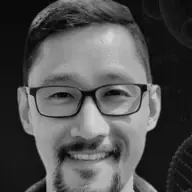
In the eighth episode of Down To A Science, Kevin G. Libuit talks with Dean Lee, a computational biologist and the founder of Dean’s List, about the career crisis facing millennial scientists. They discuss why every path in the life sciences seems to lead to a PhD, the hiring boom during the pandemic and the downturn since, why a $140,000 offer in an expensive hub can still be the wrong one, the credentialism behind PhD-required jobs, industry PhD programs in Europe, and how AI is blurring the lines between roles. They close on building community instead of networking, what an hour a week can realistically achieve, and defining the life you want before choosing your next role.
Dean Lee is a computational biologist and the founder of Dean’s List, a newsletter and community for scientists building careers in biotech. His writing on life science careers reaches more than 50,000 followers on LinkedIn.
Ideas to take with you
Six key takeaways
The old contract doesn’t pay off for everyone.
Dean describes the chief millennial complaint: you jump through all the hoops, and the reward is gone by the time you finish. For life scientists, he says, there are more hoops and they take longer, because the expected route runs through a PhD.
02:30 ↗The downturn is real, but it isn’t the whole story.
Dean went from dozens of unsolicited recruiter messages a year during the pandemic to about five a year now. He argues that the boom was a blip in a longer trend: a steady supply of PhDs, low starting pay, and rising costs in the hubs where most scientists start.
08:45 ↗Do the math on an offer.
A $140,000 salary sounds like a lot, but Dean walked through rent, commuting, and childcare for a single-income family with young children in a biotech hub and concluded the job might not be worth taking. Scientists rarely learn what their expertise is worth.
11:38 ↗AI lets scientists add a second skill.
Dean sees the lines between adjacent roles blurring. An expert in cell and gene therapy can take on some business development work with AI tools, he says, while the reverse is much harder. He calls the result a “scientist plus.”
27:36 ↗Build community, not a list of contacts.
Kevin argues that networking works best as community building. Dean agrees and suggests volunteering with a group such as a Nucleate chapter or a postdoc association, and organizing events, so the whole community becomes your network.
47:55 ↗Define your end game first.
Quantify the time you really have, then pick goals that fit it. Dean borrows from the FIRE movement: work out how much money the life you want actually costs, and the number may be lower than you think.
53:48 ↗
Find your thread
Episode chapters
Chapter times match the published YouTube episode. Each time opens that point on YouTube.
- 00:00 ↗
We're here. Now what?
A preview: Dean on why a $140K industry offer can still be barely enough for a family in a biotech hub.
- 00:50 ↗
Meet Dean Lee
Kevin introduces Dean, a computational biologist who writes about life science careers.
- 02:30 ↗
The millennial career crisis in the life sciences
A term Dean borrows from career coach Janel Abrahami, and why it fits biotech and pharma.
- 04:21 ↗
Why every path seems to lead to a PhD
If you don’t want medicine, the advice is to get a PhD: six years of funded, poorly paid job training.
- 05:18 ↗
From pandemic boom to a five-year downturn
Graduates with name-brand PhDs struggling to find work, and laid-off scientists taking six months or more to get back in.
- 08:45 ↗
From dozens of recruiter messages to five a year
Dean compares his LinkedIn inbox in 2020 and 2021 with today, and asks why the supply of PhDs never changed.
- 11:38 ↗
When a $140K offer is the wrong one
Rent, commute, and childcare for a single-income family with young children in a biotech hub.
- 12:43 ↗
If you don't know why, don't get the PhD
The advice Kevin got as a senior, and the opportunity cost nobody calculates at 22.
- 14:00 ↗
Dean's path: UCLA research to a Harvard PhD program
An undergraduate research program built to send students to PhDs, and a grad school stipend that felt like a fortune.
- 15:27 ↗
Scientists don't know what they're worth
Tech has public salary benchmarks; the life sciences have no equivalent, and professors and career centers rarely help.
- 18:11 ↗
Credentialism: why industry requires a PhD
Good science needs good training, which often, but not only, happens in a PhD program.
- 20:29 ↗
The incentives that keep the pipeline flowing
Why industry and universities both benefit from long training, and why the individual often doesn’t.
- 22:38 ↗
Industry PhDs in Europe
Doctoral projects with an industry mentor and an industry salary, and industry postdocs in the US.
- 24:42 ↗
Buyer's remorse: what's the next step?
Kevin asks what agency scientists have now that the old contract no longer pays off.
- 25:21 ↗
Why science skills will stay in demand
The hardest problems in human health remain unsolved, and fewer students may sign up for a PhD by default.
- 27:36 ↗
AI blurs the lines between roles
Expert in X, now able to take on some Y: the example of cell and gene therapy plus business development.
- 30:13 ↗
Lead scientist without a PhD
Kevin’s path from a master’s degree to lead scientist in a state public health lab through bioinformatics.
- 33:44 ↗
The scientist plus
Deep technical training plus a second skill, and early-stage founders doing more with AI tools.
- 35:38 ↗
Sidestepping into consulting after layoffs
Laid-off scientists starting one- and two-person consultancies, and Kevin’s own experience growing a services company.
- 38:25 ↗
Nucleate and entrepreneurship in grad school
Student-led chapters where trainees pitch ideas, meet founders, and volunteer their way into the startup community.
- 41:59 ↗
What Gen Z is learning from millennials
Lessons from student debt, and why millennials are now the adults in the room.
- 44:31 ↗
When you're already maxed out
A postdoc with young children asks how to learn faster, and Dean’s answer is to quantify the time you have.
- 47:02 ↗
What an hour a week can do
About 50 hours a year is enough to learn a basic RNA-seq workflow, but not to qualify for the Boston Marathon.
- 47:55 ↗
Stop networking, start building community
Kevin’s case, borrowed from his wife, for community over transactional networking.
- 51:11 ↗
Always be the organizer
How a San Diego postdoc used event planning to meet industry professionals.
- 53:48 ↗
Define your end game
Treating career choices like an experiment: set the endpoint, then adjust the variables.
- 54:39 ↗
How much money is enough?
Lessons from the FIRE movement, and the option of moving away from an expensive hub.
- 57:10 ↗
Choosing family over a 996 startup
Kevin passes on an exciting Bay Area AI-bio startup that expects long hours on site.
- 58:16 ↗
Where to follow Dean
Dean’s List, and the simplest option: find Dean on LinkedIn.
The longer read
In-depth summary
The millennial career crisis in the life sciences
Kevin opens with the idea of a broken social contract: millennials worked hard, earned degrees, and now wonder whether they received what they were promised. Dean credits the term “millennial career crisis” to career coach Janel Abrahami. He says he doesn’t agree with every millennial complaint, but looking at biotech and pharma, he thinks there is something to it. Life scientists have more hoops to jump through, and they take longer, because the expected route runs through a PhD.
Students who don’t want to go into medicine, dentistry, or pharmacy are told to get a PhD, Dean says, and for a long time that worked. He thought of his own PhD training as six years of paid, if poorly paid, job training. He made the move to industry before the pandemic. Since then, he says, the life science job market boomed and then fell into a downturn that is now almost five years old. Graduates with PhDs from Stanford, Harvard, and MIT are struggling, and scientists laid off after three to ten years in industry are told to expect at least six months to find a new job.
From boom to downturn, and an offer that didn’t add up
Dean looked back through his LinkedIn messages from 2020 and 2021: multiple recruiters every week, 50 to 100 unsolicited contacts a year. Now he gets about five a year, even as a fairly visible person online. The common explanation is too much easy money during the pandemic. But the number of life science PhDs didn’t change in five years, he notes, and in his view NIH funding for PhD training has stayed roughly flat, adjusted for inflation, for decades. The boom, he argues, was a blip in a longer story of scientists not earning what they need in their 30s and 40s, while housing and everything else costs more.
He describes a message from someone with a $140,000 offer, who would be the only earner in a family with two or three young children. His first reaction was that $140,000 is a lot of money. Then he looked at rent in nearby towns, the commute, and childcare, and concluded that the person might be better off not taking the job.
The default PhD and not knowing your worth
Kevin shares the advice a mentor gave him in his senior year: if you don’t know what you’re going to do with your PhD, don’t get one. In academia, everyone who is a professional has a PhD, so it feels like the obvious next step, and nobody calculates six or seven years of opportunity cost at 22. Dean’s experience at UCLA was similar. He was in an undergraduate research program built to send students to PhD programs, and he says students who chose medicine could be removed from it. That support got him into a PhD program at Harvard, with a stipend of about $30,000 a year that felt like more money than he had ever made.
No one tells scientists what their expertise is worth, Dean says. Tech has salary benchmarking sites such as Levels.fyi, organized by years of experience and scope. The life sciences have no equivalent, professors rarely know, and career centers are too general to help. Kevin, who serves on an advisory council at his alma mater, James Madison University, says he advocates for bringing working professionals into contact with students so they can plan with real numbers.
Credentialism and the incentives behind it
Dean has written about credentialism in the industry. Good science needs good training, he says, and that often happens in a PhD program, but not only there. His hypothesis, which he says is unproven, is that a steady supply of government-funded life science PhDs lets industry require a PhD for almost every job. Graduates coming off stipends of $25,000 to $30,000 have little negotiating power, so for years industry could offer around $80,000. He hears of entry-level roles after a PhD or postdoc now paying $110,000 to $120,000.
Kevin points to incentives on both sides. Industry can wait for scientists with years of training, and universities benefit from graduate students who write the papers and anchor the grants. Neither, he says, is a conspiracy, but the incentives aren’t aligned with the individual, who later has children, aging parents, and a mortgage. Dean adds that other fields, such as computer science, never had as much government money for training, so people are told to go work at places like Google or Microsoft, whose internal research programs he compares with the best PhD programs.
Dean also likes the industry PhD tracks in parts of Europe, where a student works on a thesis project with an industry mentor and an academic mentor and earns a livable salary. He believes the Netherlands is one of the countries that offers them. Kevin notes that his own APHL-CDC fellowship in public health was closer to an industry postdoc. Dean adds that large pharma companies, such as Genentech, run prestigious industry postdoc programs and publish good papers, so the argument that the best science happens only in academia doesn’t hold.
AI, blurred roles, and the scientist plus
Dean sees good news. The problems life scientists are trained for are hard and valuable, he says, which is why frontier AI labs are building tools to help scientists rather than replace the need for them. Students are more careful about committing to a PhD, and the job market responds to supply and demand: during the pandemic, when computational biologists were in demand, he got callbacks for jobs listed as PhD required before he had one.
AI is also blurring the lines between adjacent roles. Someone hired as an expert in X used to work alongside an expert in Y. Now, Dean says, AI lets the X expert take on some of the Y work and grow into both. His example is cell and gene therapy plus business development. It works from the technical side, he says, but not the other way around. The people who do well will create new jobs before those jobs have names.
Kevin is an example of the change. He earned a master’s degree in 2016 and joined Virginia’s state public health lab, where he was told that senior roles required a PhD. Because bioinformatics skills were scarce, he became a lead scientist within about three years, possibly the only one in the state without a PhD at the time. He later moved into operations and business development, applying the same scientific thinking. Dean describes the result as a “scientist plus”: someone with deep technical training plus another skill. He says he recently pulled together a business landscape analysis in a few hours with AI tools, and that early-stage founders in Cambridge and Boston are doing the same.
Consulting, Nucleate, and building community
Since the layoffs, Dean has seen many scientists start one- or two-person consulting businesses, helped by AI tools. Kevin calls it his playbook: at Theiagen Genomics, he says, the work started with two people and grew in five years to a team of about 30 serving public health labs around the world. Dean recommends Nucleate, a student-led organization with chapters for trainees interested in biotech startups. Volunteer for your local chapter, he tells students, even if it means bringing the coffee, because many of the people you meet will be founders who may hire you as their first bioinformatician or lab manager. Kevin mentions a similar entrepreneurial path in Episode 7 with Dr. Niamh O’Hara of Biotia.
Networking gets a bad rap, Kevin says, because it can feel transactional. His wife suggested a better frame: you are building a community of people who think about the same things you do. Dean agrees that rooms of strangers are the least effective way to network. Volunteering for a group makes the whole community your network. He shares advice from Becky Salomon, a postdoc in San Diego who helped her local postdoc association invite industry speakers. Even when people declined, she would ask for 15 minutes to learn about their work, so her event planning became her networking.
Limited time, an hour a week, and your end game
Dean recalls a computational biology upskilling workshop he co-hosted with Tommy Tang, the guest of Episode 6, in the summer of 2025. A postdoc with children asked how to learn faster when every free minute already went to the lab, the kids, or study. Dean had no advice, because she was already maxed out. Peace, he says, comes from recognizing your limits, quantifying how much time you can give, and setting smaller goals you can still meet. One coffee chat a month for six years of a PhD adds up. One hour a week is about 50 hours a year, enough, with AI tools, to learn a basic RNA-seq workflow, but not to train for and qualify for the Boston Marathon.
Kevin asks how to define the end game, something he says many millennial scientists skipped by trusting the system. Dean points to the personal finance community around FIRE (financial independence, retire early): work out what the life you want costs, then work backward. The number, he says, is often lower than people expect. Because most scientists start in expensive hubs, a family with a partner in a portable career, such as nursing or teaching, might sell a small home and move somewhere cheaper. Kevin closes with his own decision to pass on an exciting Bay Area AI-bio startup that expected 996-style hours on site, because he wants to be with his children in Washington State. Dean says he made the same call with what he thinks is the same company.
In their words
Transcript excerpts
Selected passages from the episode, with filler words removed and punctuation lightly normalized. Bracketed words are added for clarity. Timestamps mark where each passage begins.
More hoops, more years
“The chief millennial complaint is like you jump through all the hoops and you’re supposed to get this thing at the end. And by the time you jump through all the hoops, that thing at the end isn’t there anymore. And for life scientists, […] there’s many more of them and it takes far longer because typically you have to get a PhD.”
The recruiter test
“I was looking through my LinkedIn messages during the pandemic, like 2020 and 2021, and I saw like every week I got multiple recruiters reaching out about a job. Every single week. […] Nowadays it’s like maybe five times a year. And that’s with me being a fairly visible person online.”
Doing the math
“And it’s 140K, but I’m gonna be the only person working and I have two or three kids. Is that enough? […] And then I did the math and I was looking at the rent in like nearby towns and the commute and like childcare. And I realized that it may be better for you to not take that job […], unfortunately.”
What scientists are worth
“No one ever told you […] as a scientist, you have an expertise that deserves this much money, right? […] And it’s not like in other industries where people exchange those numbers a lot. […] And that thing doesn’t exist in the sciences, in the life sciences, and people don’t ask about it.”
Good training
“I’ve written a lot about this kind of credentialism in the industry. […] You don’t need a PhD […] to do good science in general. You need good training. And a lot of times good training happens in the context of a PhD program. But it doesn’t only happen in the context of PhD programs.”
X and Y
“It used to be that you were the expert in X and you were hired to do X. And you […] worked alongside an expert who does Y. […] But now AI is giving you the ability to also take on some of the Y track work. And then over time you can become an X and Y specialist.”
One hour a week
“One hour a week, that’s about […] 50 hours a year. Is that enough for me to learn this one skill? And that probably is, with the help of AI tools now. […] If I were to say, I have an hour a week and I wanna […] train and qualify for the Boston Marathon in a year, it’s not gonna happen.”
Community, not networking
“It’s not really networking, it’s building your community. […] It’s like I wanna build a community. I wanna know people who are thinking about the things Dean’s thinking about.”
Be the organizer
“You always wanna be the organizer of some cause because that is the best way to network.”
Keep exploring
Show notes & source links
People, organizations, programs, and further reading connected to the conversation. Each entry explains the connection. Links are references, not endorsements.
Dean Lee & Dean’s List
- Dean’s List · Dean Lee’s newsletter ↗
Dean’s newsletter, which moved from LinkedIn to beehiiv in October 2026: long-form interviews with life scientists reimagining their work. On air, he says the simplest way to follow him is LinkedIn.
58:16 ↗ - There are ~500,000 millennial life scientists in the US · Dean Lee ↗
September 2026. Dean’s estimate, built from NSF degree data, of how many US millennials trained in the life sciences, the group this episode is about.
02:30 ↗ - Dean Lee on GitHub ↗
Dean’s code and computational biology projects.
00:50 ↗
Ideas & communities
- The Career Crisis Survival Guide · Janel Abrahami ↗
September 2026. Career coach Janel Abrahami, whom Dean credits with coining the term, on what she calls the Great Millennial Career Crisis.
02:30 ↗ - Nucleate ↗
The student-led nonprofit for biotech trainees that Dean recommends, with programs for future founders and career development.
38:25 ↗ - Nucleate chapters ↗
Nucleate’s list of local chapters, where Dean suggests students and postdocs volunteer to get to know future founders.
38:25 ↗ - Public Health Laboratory Fellowship Program · APHL ↗
The APHL-CDC fellowship program that Kevin compares to an industry postdoc, with placements in public health laboratories.
22:38 ↗
Money & work
- FIRE movement · Wikipedia ↗
An overview of financial independence, retire early, the personal finance approach Dean borrows for working out how much money is enough.
54:39 ↗ - Mr. Money Mustache ↗
The early-retirement blog Kevin names when Dean brings up the FIRE community.
54:39 ↗ - 996 working hour system · Wikipedia ↗
The 9 a.m. to 9 p.m., six-days-a-week schedule Kevin cites when explaining why he passed on a startup.
57:10 ↗
From the show
- Episode 6 · Bioinformatics in the Age of AI with Dr. Tommy Tang ↗
Tommy Tang co-hosted the 2025 computational biology upskilling workshop Dean describes.
44:31 ↗ - Episode 7 · Fighting Infections with Genomics and AI with Dr. Niamh O’Hara ↗
Kevin’s conversation with the Biotia co-founder, whose path from a Cornell Tech program to a clinical diagnostics company he mentions here.
41:07 ↗
Accuracy & context
Editorial notes
- Timestamps. Chapter times match the published YouTube episode. Excerpts at 04:11, 08:53, 15:29, 47:20, 48:28 and 51:29 begin partway through a transcript line, so their times are approximate and may be a few seconds off.
- Claims and figures. Dean’s and Kevin’s views on careers, hiring, and pay are their own. Figures given in conversation, such as recruiter messages per year, stipends, starting salaries, and time to find a job after a layoff, are given as they said them and are not verified here. Dean calls his explanation of credentialism a hypothesis. His view that NIH funding for life science PhD training has stayed about the same, adjusted for inflation, over 20 to 30 years is given from memory and is not verified here. He hedged on which European countries offer industry PhD tracks (“I think Netherlands is one of them”), so these notes don’t list them.
- Not financial or career advice. The conversation discusses salaries, budgets, and career choices in general terms. Links are references, not endorsements.
- Left unnamed. The company behind the $140,000 offer Dean describes, the Bay Area startup Kevin passed on, and Kevin’s undergraduate mentor are not named, because the speakers didn’t name the startup and the other names could not be confirmed from the transcript. Dean’s employer is not named in these notes. Levels.fyi, the salary site Dean mentions, and Genentech’s postdoc program are named without links because their pages could not be checked. Dean moved Dean’s List from LinkedIn to beehiiv in October 2026, so these notes link the beehiiv edition.
- Names and terminology. These notes use Genentech, Nucleate, RNA-seq, Theiagen, Janel Abrahami, and Dr. Niamh O’Hara of Biotia where the automatic transcript contains phonetic spellings. Dean credits the term “millennial career crisis” to career coach Janel Abrahami; her name is confirmed against her own newsletter. Becky Salomon, the San Diego postdoc Dean quotes, is named as he tells it and is not linked because her profile could not be confirmed.
Quick answers
About the episode & the show
- Who is Dean Lee?
- Dean Lee is a computational biologist and the founder of Dean’s List, a newsletter and community for scientists building careers in biotech. His writing on life science careers reaches more than 50,000 followers on LinkedIn. He studied at UCLA, entered a PhD program at Harvard, and later moved into industry.
- What does Episode 8 cover?
- Episode 8 explores the career crisis facing millennial scientists. Dean Lee and Kevin G. Libuit discuss why so many paths lead to a PhD, the pandemic hiring boom and the downturn since, credentialism, industry PhDs in Europe, how AI blurs the lines between roles, building community instead of networking, and defining the life you want.
- What is the millennial career crisis?
- Dean borrows the term from career coach Janel Abrahami. The idea is that millennials did everything they were told, such as earning degrees and working hard, but the reward was gone by the time they finished. For life scientists, he says, the path is longer, because so many roles expect a PhD.
- Why do so many life science jobs require a PhD?
- Dean’s hypothesis, which he says is unproven, is that a steady supply of government-funded life science PhDs lets industry ask for one by default. Graduates leaving low stipends have little negotiating power. He argues that good science needs good training, which often, but not only, happens in a PhD program.
- How is AI changing careers for scientists?
- Dean says AI is blurring the lines between adjacent roles. A scientist with deep technical training can take on work from a neighboring field, such as business development, and grow into both. He calls this a “scientist plus” and expects new roles to appear before they have names.
- What can a busy scientist do with one hour a week?
- Dean suggests quantifying the time you really have. One hour a week is about 50 hours a year, which he thinks is enough to learn a basic RNA-seq workflow with the help of AI tools, but not enough to qualify for the Boston Marathon. Set goals that fit your time.
- Who hosts Down To A Science?
- Kevin G. Libuit hosts Down To A Science, a podcast of conversations with practitioners in science, technology, and business about their work, personal insights, and real-world impact. A scientist by training, Kevin is Chief Operating Officer at Galang AI, which presents the show. He previously led technology and operations at Theiagen Genomics.
- Where can I watch or listen to Episode 8?
- Watch Episode 8 of Down To A Science on YouTube, or listen on Spotify, Apple Podcasts, or Amazon Music. The episode runs just under an hour. The platform links at the top of this page open the episode directly, and the Show Notes index collects the guide for every episode.